Drive Appointments: 15 Auto Dealer Social Media Ideas by Goal
This article gives you 15 practical social post ideas for car dealerships, mapped to the right platform and tied to outcomes such as appointments and delivered units, not just likes. We built it around a simple idea: a walkaround video, a service tip clip, and a templated delivery photo each do a different job in your funnel, and treating them the same way wastes effort.
TL;DR:
- Posting short vehicle walkarounds and new inventory updates can generate clickable traffic if links are refreshed weekly and properly tagged.
- Aligning different post types with suitable platforms enhances reach; vertical videos perform best on TikTok and Reels, while carousels suit Instagram and Facebook.
- Using a weekly batching process with standardized templates speeds production, maintains branding, and reduces reliance on external design resources.
- Tracking social media links with UTMs and routing leads to dedicated landing pages connects engagement to actual sales and service bookings.
- Implementing a 30-day testing plan focusing on one content format and outcome helps refine social strategies and strengthens appointment or delivery metrics.
Table of Contents
- 1. Top Social Media Post Ideas for Dealers
- 2. Matching Each Idea to the Right Platform
- 3. Building a Repeatable Production Workflow
- 4. Tying Social Posts to Appointments and Sold Units
- 5. How Templated Publishing Speeds Dealer Execution
- 6. Three Moves Worth Prioritizing This Month
- Try Templated Dealer Content with Photofy
- FAQ
- Sources
1. Top Social Media Post Ideas for Dealers
Each idea below works as a standalone post. Pair two or three per week and you have a calendar that covers discovery, trust, and retention without repeating yourself.
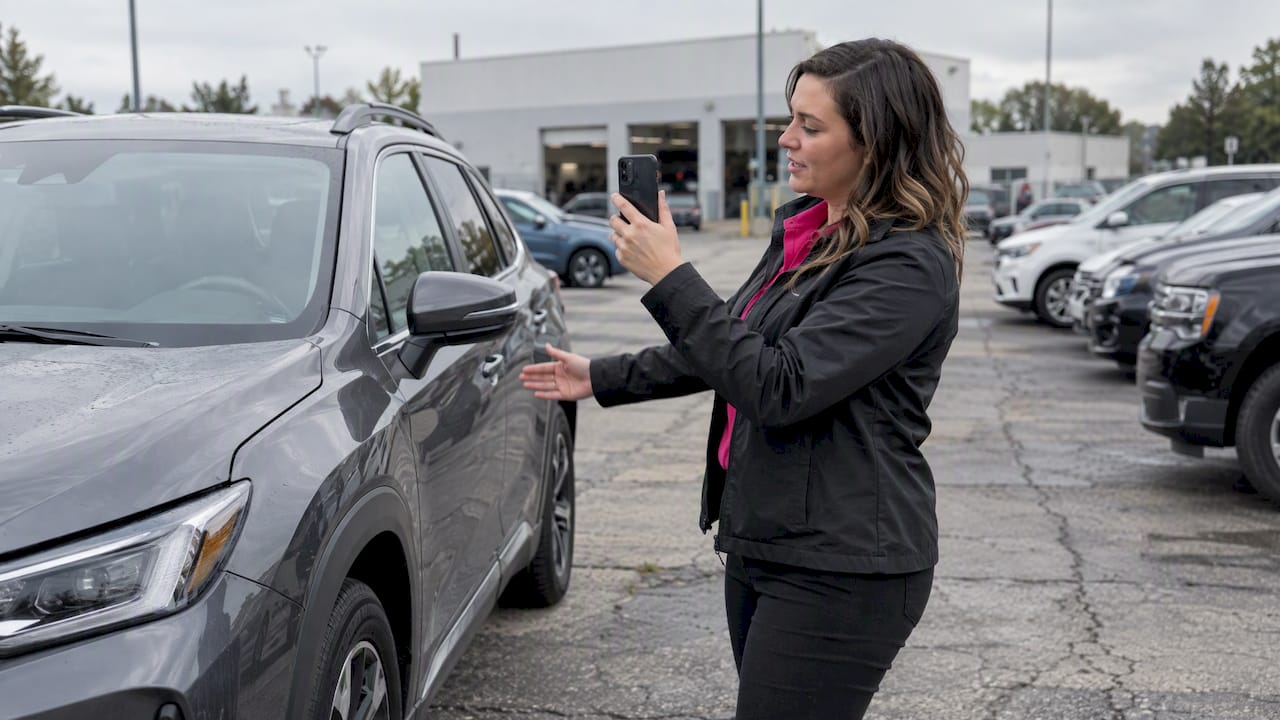
- Inventory walkaround videos. Film a 60-second walk around a featured vehicle and link to the current VDP with a UTM tag so clicks trace back to the post.
- Shoot in portrait for Reels and Shorts.
- Refresh the link weekly so you never point shoppers at a sold unit.
- New-arrival and price-drop posts. Announce fresh inventory or a price adjustment with a single clear call to action.
- Pull photos straight from your feed to avoid mismatched listings.
- Add a deadline or unit count to create urgency without overpromising.
- Service explainers and how-to clips. Short tips on brake wear, tire rotation, or seasonal checks end with a booking link.
- Keep each clip under 90 seconds.
- Caption with the service name so it’s searchable.
- Customer delivery photos and short testimonials. A happy buyer next to their new vehicle builds trust fast.
- Get signed permission before posting any customer photo or quote.
- Disclose any incentive given for the testimonial, per FTC disclosure guidance.
- Employee spotlights and technician tips. Introduce the people behind the sales floor and service bay.
- Rotate through departments monthly.
- Let technicians share one quick maintenance tip on camera.
- Before-and-after detailing or repair pairs. Side-by-side photos show the value of your service work.
- Use consistent lighting and angles for a fair comparison.
- Pair with a short case story in the caption.
- Live product reveals and Q&A streams. Go live for a new model drop or an open Q&A on financing questions.
- Announce the stream 24 hours ahead across platforms.
- Save the replay as a long-form YouTube asset.
- Contests and giveaways. A small giveaway tied to a service visit or test drive drives shares.
- Post clear entry rules and an end date.
- Disclose sponsorship terms clearly if any brand partner is involved.
- Model comparisons and best-for lists. Compare two trims or models for a specific buyer type, like commuters or families.
- Keep the hook specific: “Best compact SUV for a growing family.”
- Link each model name to its VDP.
- Community partnerships and local features. Highlight a local business, charity event, or sponsorship.
- Tag the partner and cross-promote on their channels.
- Use these posts to build local proof, not direct sales pitches.
- Staff picks and themed weekly posts. A recurring “Friday Favorite” vehicle pick keeps a consistent posting rhythm.
- Assign a rotating staff member to choose the pick.
- Repeat the format weekly so followers know what to expect.
- Educational posts on financing and ownership costs. Break down trade-in value, loan terms, or total cost of ownership in plain language.
- Use a simple graphic over a dense paragraph.
- Link to a financing landing page, not just a contact form.
Those twelve ideas cover discovery, trust, and retention. Mixing in live events and themed recurring posts, as in ideas 7 and 11, fills the gaps between bigger campaigns.
2. Matching Each Idea to the Right Platform
Not every idea belongs on every platform. Walkarounds and delivery photos perform best as Reels or TikTok Shorts, where vertical video gets priority placement. Model comparisons and staff spotlights work well as Instagram or Facebook carousels, where a swipe invites a slower read. Live Q&A and reveals belong on Facebook Live or YouTube Live, and long-form service explainers or full walkarounds find a second life on YouTube as searchable, evergreen content.
- Keep your Facebook and Instagram inventory catalog synced to your actual lot so feed ads never point to sold units.
- Treat DMs and comments as a lead channel: answer within a few hours, not days.
- Add subtitles to every video; most viewers watch with sound off.
- Match aspect ratio to platform (9:16 for Reels and Shorts, 1:1 or 4:5 for feed posts).
Pro Tip: Write your hook in the first three seconds of any video; that’s where most viewers decide whether to keep watching.
3. Building a Repeatable Production Workflow
Dealers don’t need an outside studio to produce this volume consistently. A weekly capture window, where one person films walkarounds and deliveries for an hour, feeds an entire week of posts. Templates speed up approvals because a manager reviews a layout once, not every individual post, which keeps branding consistent across locations.
- Set a weekly capture block (Tuesday mornings work well for most service departments).
- Use a template library so new hires can produce on-brand posts without starting from scratch.
- Repurpose one long video into three clips, a carousel, and a caption set.
- Assign clear roles: a creator who shoots, an approver who checks brand and compliance, a publisher who schedules, and a responder who handles comments and DMs.
Pro Tip: Batch a month of delivery photos and walkarounds in one afternoon, then schedule them across the following four weeks.
4. Tying Social Posts to Appointments and Sold Units
Likes and shares don’t pay the bills, which is why an omnichannel marketing approach can unify customer experience and drive growth. Track VDP clicks through to appointments and delivered units, and tie service explainer clips to repair order bookings instead of view counts alone.
- Add UTM parameters to every link so each post’s traffic shows up distinctly in analytics.
- Send social leads to a dedicated landing page, then route them into your CRM for follow-up.
- Review feed freshness weekly to suppress sold units before they generate wasted clicks.
A significant portion of initial research touchpoints for car buyers now run through social media, according to Cox Automotive’s buyer journey study, which also found that shoppers using digital and AI-assisted tools report higher satisfaction. That’s a strong argument for pairing your posts with a clear next step, not just a pretty photo.
5. How Templated Publishing Speeds Dealer Execution
Templates close the gap between “we should post more” and actually doing it. One dealer social content library built for same-day publishing included 200 ready-to-use post templates, covering inventory, service, and delivery posts a team could launch the same day they were built.
- Start testing a template library with service posts and delivery photos first; they’re the easiest to standardize.
- Use white-label controls so every location posts on-brand without a designer reviewing each image.
- Route templates through a simple team approval flow before anything multi-location goes live.
6. Three Moves Worth Prioritizing This Month
Run a 30-day test on one format, tied to one outcome like delivered units or repair order bookings. Build a weekly capture habit and a rolling 90-day calendar. Keep organic trust content and paid prospecting separate, and measure each by its own outcome.
— Jon
Try Templated Dealer Content with Photofy
Our platform helps your team spend less time wrestling with design software and more time publishing the posts above. Templated libraries, scheduling tools, and white-label controls can help a single marketing manager keep every location on-brand without routing every post through a designer.
- Start with our Small Business plan; current prices are on the pricing page.
- Multi-location groups can review Pro Teams and Enterprise Teams pricing for per-user plans; current prices are on the pricing page.
- Explore enterprise and individual pricing to find the right fit before you commit.
Check our pricing page to pick a plan and start publishing your next batch of posts this week.
FAQ
What are the best social media platforms for car dealerships?
Facebook and Instagram work best for inventory catalogs and local trust content, while TikTok and Instagram Reels drive discovery through short vehicle and service videos. YouTube serves longer walkarounds and reveals well since that content stays searchable over time.
What are some engaging social media content ideas for cars?
Walkaround videos, before-and-after detailing photos, and customer delivery shots consistently perform well because they show a real vehicle and a real outcome. Staff spotlights and themed weekly posts, like a recurring favorite-pick feature, keep a feed active between bigger campaigns.
How much does a car salesman make off a $20,000 car?
Commission structures vary widely by dealership and pay plan, so there’s no single figure that applies everywhere. Dealerships typically set their own commission percentages or flat unit bonuses, so check with a specific dealer’s pay plan for an accurate number.
What are some effective marketing ideas for a car dealership?
Pairing organic trust content, like testimonials and community features, with paid prospecting ads tends to outperform either approach alone, according to dealership social media guidance. Tracking posts through to appointments and delivered units, rather than likes alone, helps marketing teams see what’s actually working.
Do dealerships need to disclose paid endorsements on social media?
Yes. The FTC requires clear and conspicuous disclosure of any material connection, like a free service or payment, behind a customer or influencer endorsement. Simple terms like “Ad” or “Sponsored” placed directly on the post satisfy this requirement.
Sources
- Disclosures 101 for Social Media Influencers (FTC)
- Dealership Social Media Marketing: 2026 Strategy & ROI Guide
- Cox Automotive Car Buyer Journey Study Finds Efficiency, Digital Tools and AI Drive Record Satisfaction