

Best Sprout Social Alternatives for Agencies in 2026
For agencies and scaling teams, Agorapulse is the top Sprout Social alternative in 2026, offering white-label reporting, multi-client dashboards, and flat-rate pricing that simplifies budgeting compared to per-seat models. Small in-house teams get the most value from SocialBee or Metricool, both of which offer broad channel coverage at a fraction of Sprout’s entry cost. Visual-first creators and franchise networks should look at Later or Photofy first. Keep Sprout Social if enterprise-grade listening and polished reporting are genuinely mission-critical for your team and budget is not the deciding factor.
TL;DR: Quick picks by use case
- Agorapulse — best for agencies managing multiple client accounts with approval workflows
- Sendible — best for mid-size agencies that need white-label reports and CRM integrations
- SocialBee — best for small in-house teams that want content recycling and low per-seat cost
- Later — best for visual creators focused on Instagram, TikTok, and grid planning
- Metricool — best for teams that need unified analytics across organic and paid channels
- Photofy — best for franchise networks, direct-selling brands, and teams where templated visual content and brand-consistent asset distribution are the priority
- ContentStudio — best for content-heavy teams that want AI writing assistance built in
Pro Tip: Before you commit to a trial, map your three most time-consuming weekly tasks in Sprout Social. Then test whether your shortlisted alternative handles those specific tasks faster. That single exercise will tell you more than any feature checklist.
Table of Contents
- How these Sprout Social alternatives compare at a glance
- Mini-reviews: what each alternative actually does better than Sprout Social
- How we chose and scored these alternatives
- How to choose and migrate away from Sprout Social
- When keeping Sprout Social makes sense, and when switching pays off
- How customer support quality actually differs across these platforms
- Scalability and performance across different team sizes
- Security and compliance features for agencies and enterprises
- Key Takeaways
- What I actually watch during a platform pilot
- Photofy is built for teams where content creation is the bottleneck
- Sources and further reading
How these Sprout Social alternatives compare at a glance
| Tool | Best For | Starting Price | Pricing Model | Channels | Agency/Multi-Client | Collaboration & Approvals | Analytics Strength | AI/Automation | Integrations | Trial/Free Plan |
|---|---|---|---|---|---|---|---|---|---|---|
| Agorapulse | Agencies, multi-client | ~$49/mo | Per user | FB, IG, X, LI, YT, TikTok, GBP | ✅ Strong | ✅ Full approval flows | ✅ Strong | ✅ AI writing | CRM, Zapier | Free plan |
| Sendible | Mid-size agencies | — | Per user | FB, IG, X, LI, YT, GBP, Pinterest | ✅ Strong | ✅ Approval workflows | ✅ Good | ✅ AI assist | Canva, Google Analytics | free trial available |
| Hootsuite | Enterprise, large teams | — | Per user | FB, IG, X, LI, YT, TikTok, Pinterest | ✅ Strong | ✅ Full workflows | ✅ Strong | ✅ AI tools | 150+ integrations | 30-day trial |
| Planable | Collaboration-first teams | ~$33/mo | Per workspace | FB, IG, X, LI, YT, TikTok, GBP | ✅ Good | ✅ Best-in-class | ⚠️ Limited | ⚠️ Basic | Zapier, Canva | Free plan |
| SocialBee | Small in-house teams | — | Per profile set | FB, IG, X, LI, YT, TikTok, Pinterest | ⚠️ Limited | ✅ Approval workflows | ✅ Good | ✅ AI writing | Canva, Zapier | free trial available |
| Later | Visual creators | ~$16.67/mo | Per profile set | IG, TikTok, FB, X, LI, Pinterest, YT | ⚠️ Limited | ⚠️ Basic | ✅ Good | ✅ AI captions | Shopify, Canva | Free plan |
| Metricool | Analytics-focused teams | ~$22/mo | Per brand | FB, IG, X, LI, YT, TikTok, Pinterest, Twitch | ⚠️ Limited | ⚠️ Basic | ✅ Strong | ✅ AI tools | Google Ads, Meta Ads | Free plan |
| ContentStudio | Content-heavy teams | — | Per workspace | FB, IG, X, LI, YT, TikTok, Pinterest, GBP | ✅ Good | ✅ Approval workflows | ✅ Good | ✅ AI writing | Zapier, RSS | free trial available |
| Statusbrew | Mid-market, engagement | — | Per user | FB, IG, X, LI, YT, TikTok, GBP | ✅ Good | ✅ Approval workflows | ✅ Good | ✅ AI tools | Slack, Zendesk | free trial available |
| Sociality.io | Data-driven teams | ~$49/mo | Per profile set | FB, IG, X, LI, YT, TikTok | ✅ Good | ⚠️ Basic | ✅ Strong | ⚠️ Limited | Zapier | 7-day trial |
| Sprinklr | Enterprise | Custom pricing | Custom/per seat | 30+ channels | ✅ Enterprise-grade | ✅ Enterprise-grade | ✅ Best-in-class | ✅ Advanced | 50+ enterprise integrations | Demo only |
| Photofy | Visual content, franchises | Free tier available | Freemium/subscription | IG, FB, and major platforms | ✅ White-label | ✅ Asset approval | ✅ Basic | ✅ Templates/AI | Asset library, scheduling | Free tier |
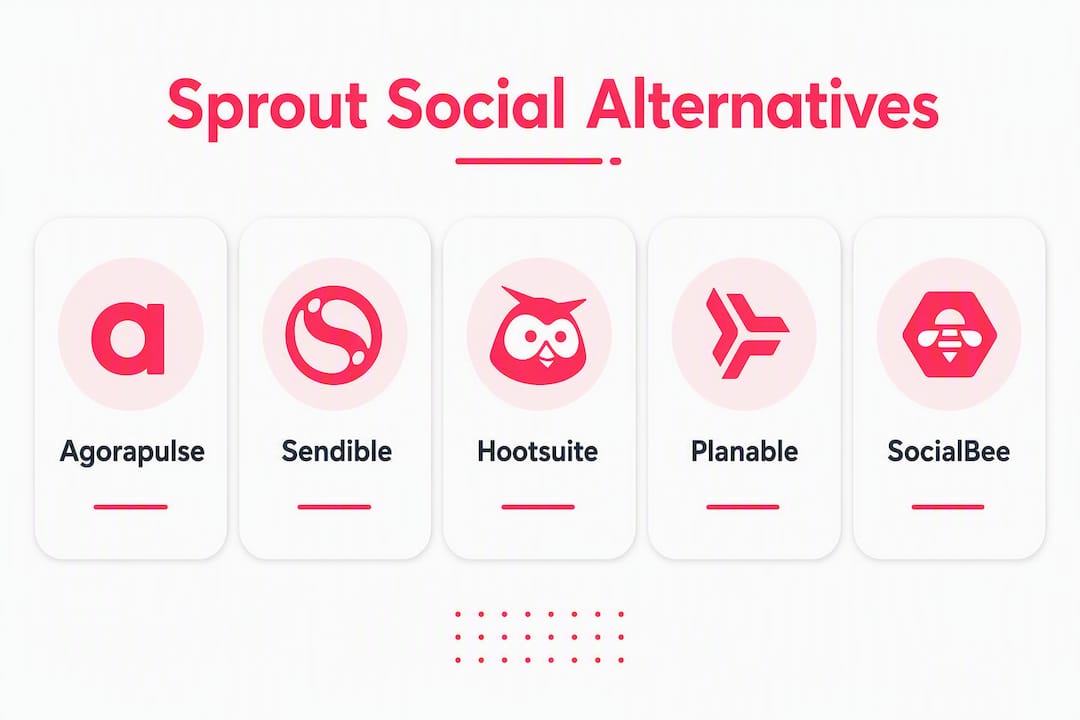
Pricing reflects publicly listed entry-level tiers and may change. Verify current rates during your vendor trial.
Mini-reviews: what each alternative actually does better than Sprout Social
## 1. Agorapulse — the agency workhorse
Agorapulse is purpose-built for agencies managing multiple client accounts, and that focus shows in every corner of the product. Its unified social inbox, client-facing reports, and multi-level approval workflows are genuinely among the best available at this price point.
Standout features:
- Unified inbox with conversation assignment and internal notes
- White-label PDF reports you can send directly to clients
- Multi-account management with per-client permission levels
- ROI tracking that ties social activity to website conversions
- Listening and monitoring across major platforms
- TikTok, Google Business Profile, and YouTube support
Pros: Flat-rate pricing makes budgeting predictable; approval workflows are intuitive enough that clients actually use them.
Cons: Listening depth is narrower than enterprise tools; the mobile app lags behind the desktop experience.
Pricing: Free plan available; paid plans start around $49/month. Pricing is per user, so costs scale with team size.

vs. Sprout Social: G2 reviewers note that Sprout edges ahead on UI polish and reporting aesthetics, but Agorapulse’s per-seat math is significantly friendlier for agencies billing across multiple clients. If you manage more than three client accounts, the cost difference becomes hard to ignore.
## 2. Sendible — white-label reporting for mid-size agencies
Sendible targets the mid-size agency that needs professional client deliverables without enterprise pricing. Its report builder is one of the most flexible in this category, pulling data from social, Google Analytics, and Google Business Profile into a single branded PDF.
Standout features:
- Custom-branded client reports with drag-and-drop builder
- Content approval workflows with client-facing review links
- Smart queues and bulk scheduling via CSV
- Canva integration for in-platform design
- RSS feed auto-posting for content-heavy clients
- CRM-style contact tagging in the inbox
Pros: Excellent value for agencies; the report builder saves hours per month.
Cons: The interface feels dated compared to newer tools; TikTok support is less mature than Instagram or LinkedIn.
Pricing: Plans start at a relatively low monthly price with a free trial available.

vs. Sprout Social: Sendible costs considerably less at entry level, and many comparison roundups confirm that alternatives like Sendible offer a better price-to-feature ratio for agencies that don’t need Sprout’s enterprise listening layer.
## 3. Hootsuite — the enterprise-ready platform
Hootsuite is the most direct Sprout Social competitor in terms of scope. It covers 150+ integrations, supports over 35 social networks, and offers enterprise-grade team management. The Sprout Social vs. Hootsuite debate usually comes down to UI preference and which platform’s reporting format fits your stakeholder reports better.
Standout features:
- Bulk scheduling and content library
- Advanced analytics with custom report templates
- Employee advocacy tools
- Ad management and boosting within the dashboard
- 150+ app integrations including Salesforce and HubSpot
- SOC 2 Type II compliance for enterprise security
Pros: Widest integration library in this category; strong ad scheduling capability that many alternatives lack natively.
Cons: The interface has improved but still feels complex for smaller teams; pricing climbs steeply with added users.
Pricing: Plans start at a higher monthly price with a free trial available.
vs. Sprout Social: Both tools score well on reporting and support. The G2 comparison shows Sprout leads on UI/UX polish, while Hootsuite leads on integration depth. For teams that need native ad scheduling, Hootsuite’s built-in capability is a meaningful advantage since ad management capability varies significantly across platforms, and Sprout has historically required separate ad tools.
## 4. Planable — collaboration-first content approval
Planable does one thing better than almost any other tool in this list: content collaboration. Its feed-style preview, real-time commenting, and multi-level approval system are designed specifically for teams where multiple stakeholders review posts before they go live.
Standout features:
- Real-time collaborative editing with threaded comments
- Multi-level approval workflows (one-click, multi-step, or custom)
- Visual feed, grid, and calendar previews
- Guest access for clients without requiring a paid seat
- Workspace-level organization for agency use cases
Pros: The approval experience is genuinely the best in class; clients find it easy to use without training.
Cons: Analytics are minimal; it is a publishing and collaboration tool, not a full social management suite.
Pricing: Free plan for up to 50 posts; paid plans start around $33/month per workspace.
vs. Sprout Social: Planable is not a Sprout replacement if you need listening, deep analytics, or a unified inbox. It is the right choice when your primary pain point is getting content approved faster.
## 5. SocialBee — content recycling for lean in-house teams
SocialBee’s category-based content recycling is its signature feature, and it genuinely solves a problem most schedulers ignore: keeping evergreen content in rotation without manual re-queuing. For small in-house teams publishing across multiple channels, that alone can reclaim hours each week.
Standout features:
- Category-based content queues with recycling rules
- AI caption and hashtag generation
- Approval workflows for small teams
- Canva integration for in-platform design
- Audience growth tools and competitor analysis basics
- Concierge service for teams that want managed posting
Pros: One of the most affordable options for teams managing multiple profiles; content recycling is genuinely useful for evergreen content.
Cons: Multi-client agency features are limited compared to Agorapulse or Sendible; listening is not a strength.
Pricing: Plans start at a relatively low monthly price with a free trial available.
vs. Sprout Social: Small in-house teams often benefit from breadth and lower cost, and SocialBee delivers both. The tradeoff is a shallower inbox and no enterprise listening.
## 6. Later — visual planning for creators and Instagram-first teams
Later built its reputation on Instagram grid planning, and it remains the strongest visual scheduling tool in this group. Visual planners and grid previews are core differentiators for creator-focused platforms, and Later’s drag-and-drop calendar is the clearest example of that principle in practice.
Standout features:
- Drag-and-drop visual content calendar with grid preview
- Link-in-bio page builder (Linkin.bio)
- TikTok and Reels scheduling with auto-publish
- AI caption suggestions and hashtag tools
- User-generated content collection and republishing
- Basic analytics for Instagram, TikTok, and Pinterest
Pros: The visual calendar is the most intuitive in this category; strong for Instagram and TikTok-first workflows.
Cons: Multi-client agency features are thin; reporting depth does not match Sprout Social or Agorapulse.
Pricing: Free plan available; paid plans start around $16.67/month. Pricing is per profile set.
vs. Sprout Social: Later costs far less and wins on visual UX for creators. Sprout wins on listening, inbox management, and enterprise reporting. They serve different primary use cases.
## 7. Metricool — unified analytics across organic and paid
Metricool’s strongest differentiator is its unified analytics dashboard that pulls organic social, paid ads (Meta, Google, TikTok Ads), and website traffic into one view. For teams that run both organic and paid programs, that consolidation removes a significant reporting headache.
Standout features:
- Unified dashboard for organic and paid channel analytics
- Competitor benchmarking and tracking
- Best-time-to-post recommendations based on your own data
- Auto-lists for Twitter/X management
- Twitch analytics for streaming brands
- SmartLinks landing page builder
Pros: Paid ad analytics integration is rare at this price point; the free plan is genuinely useful for solo marketers.
Cons: Collaboration and approval features are basic; not built for agencies managing many client accounts.
Pricing: Free plan available; paid plans start around $22/month per brand.
vs. Sprout Social: Metricool’s paid ad analytics give it a specific edge for performance marketers. Sprout’s listening and inbox management remain stronger for community-focused teams.
## 8. ContentStudio — AI-assisted publishing for content-heavy teams
ContentStudio combines a content discovery engine, AI writing tools, and a multi-channel scheduler in one workspace. Teams that publish at high volume across blogs, social, and newsletters will find the content pipeline features particularly useful.
Standout features:
- AI-powered caption, blog, and content idea generation
- Content discovery and RSS curation feeds
- Multi-channel publishing including Google Business Profile
- Approval workflows and team collaboration
- Analytics with white-label report options
- Influencer discovery tools
Pros: AI writing tools are well-integrated; content discovery helps teams that struggle with ideation.
Cons: The interface has a steeper learning curve than simpler tools; listening is limited.
Pricing: Plans start at a moderate monthly price per workspace with a free trial available.
vs. Sprout Social: ContentStudio wins on content volume and AI assistance. Sprout wins on listening depth and enterprise inbox management.
## 9. Statusbrew — engagement-focused with strong inbox management
Statusbrew positions itself around engagement and community management, with a unified inbox that handles comments, DMs, mentions, and reviews across platforms. Its rule-based automation for inbox triage is one of the more sophisticated in this price range.
Standout features:
- Rule-based inbox automation (auto-assign, auto-tag, auto-hide spam)
- Sentiment analysis on incoming messages
- Team performance reports for support and community teams
- Approval workflows with audit trails
- Slack and Zendesk integrations for support team handoffs
- TikTok and Google Business Profile support
Pros: Inbox automation saves meaningful time for high-volume community teams; Slack integration is genuinely useful.
Cons: Pricing starts higher than SocialBee or Later; publishing features are solid but not the standout.
Pricing: Plans start at a higher monthly price with a free trial available.
vs. Sprout Social: Statusbrew’s inbox automation rules are more granular than Sprout’s at comparable price points. For teams where inbox management is the primary workload, it is worth a direct comparison.
## 10. Sociality.io — data-driven teams that need competitive intelligence
Sociality.io leads with analytics and competitive benchmarking. Its competitor tracking module lets you monitor rival brands’ posting frequency, engagement rates, and content mix, which makes it useful for teams that need to justify strategy decisions with external benchmarks.
Standout features:
- Competitor analysis and benchmarking across major platforms
- Audience demographics and growth tracking
- Engagement analytics with post-level breakdowns
- Social listening for brand mentions
- Publishing and scheduling with approval basics
- Exportable reports for stakeholder presentations
Pros: Competitive intelligence features are strong relative to price; good for data-driven strategy teams.
Cons: Collaboration and approval features are basic; less suited to high-volume publishing workflows.
Pricing: Plans start at a moderate monthly price per profile set with a free trial available.
vs. Sprout Social: Sociality.io’s competitive benchmarking is a specific strength. Sprout’s overall platform depth, particularly for listening and inbox management, remains broader.
## 11. Sprinklr — enterprise-grade for large organizations
Sprinklr operates in a different weight class. It covers 30+ channels, includes enterprise-grade listening, AI-powered customer service routing, and governance controls that large organizations require. If you are evaluating Sprinklr as a Sprout Social alternative, you are likely moving up in complexity and budget, not down.
Standout features:
- 30+ channel coverage including messaging apps
- AI-powered listening and sentiment analysis at scale
- Customer service and CRM integration
- Enterprise governance, audit trails, and role-based access
- Paid media management and optimization
- Custom dashboards and enterprise reporting
Pros: The most complete enterprise social suite available; governance and compliance features are best-in-class.
Cons: Custom pricing and implementation complexity make it unsuitable for teams under 50 people; requires dedicated onboarding.
Pricing: Custom pricing only. A demo is required to get a quote.
vs. Sprout Social: Sprinklr is a step up from Sprout in enterprise scope. For large organizations where Sprout has started to feel limiting, Sprinklr is the natural next tier.
## 12. Photofy — visual content creation and brand-consistent asset management
Photofy approaches social marketing from a different angle than the scheduling-first tools above. Its core strength is content creation: pre-designed templates, a stock asset library, video stitching, and graphic overlays that let teams produce on-brand visuals quickly, without a design team.
Standout features:
- Pre-designed and custom templates for social posts, stories, and ads
- Extensive stock asset library with video stitching and overlay tools
- White-label content management for enterprise and franchise networks
- Scheduling and content calendar tools
- Multi-platform publishing to Instagram, Facebook, and major channels
- Enterprise solutions for distributed teams, franchises, and direct-selling organizations
Pros: Template-driven creation dramatically reduces time-to-publish for non-designers; white-label options make it ideal for franchise and direct-selling networks.
Cons: Not a full social management suite; enterprise listening and multi-brand inbox management are outside its primary scope.
Pricing: Free tier available for personal use; paid plans for small businesses; enterprise and franchise plans via direct inquiry.
vs. Sprout Social: Photofy is not a direct Sprout replacement for teams whose primary need is listening or inbox management. It is the stronger choice when your bottleneck is content creation speed, brand consistency across a distributed network, or visual asset management at scale.
How we chose and scored these alternatives
Every tool in this list was evaluated against eight criteria, weighted differently depending on the buyer persona.
Evaluation criteria:
- Pricing model and transparency — per-seat vs. per-brand vs. flat-rate; entry-level cost; hidden fees
- Integration depth — native connections to ad platforms, CRMs, asset libraries, and analytics tools
- Listening coverage — brand mentions, keywords, hashtags, and critically, short-form video coverage
- Collaboration and approvals — multi-level workflows, guest access, audit trails, and client-facing review tools
- Analytics and reporting quality — custom report builders, white-label options, paid + organic unified views
- Scalability — performance under high posting volume, multi-account management, and team growth
- Security and compliance — SOC 2 certification, role-based access, audit logs, and data residency options
- Support quality — response time, channel availability (chat, email, phone), and onboarding resources
How criteria were weighted by persona:
- Agencies — collaboration, white-label reporting, multi-client management, and pricing model weighted highest
- Small in-house teams — price, ease of use, channel breadth, and content recycling weighted highest
- Enterprise — governance, listening depth, integrations, and compliance weighted highest
- Visual creators — visual planning, grid preview, TikTok/Instagram support, and template tools weighted highest
Primary data sources included vendor documentation and public pricing pages, G2 and Capterra user reviews, Gartner Peer Insights evaluations, and industry commentary from practitioners. Switching decisions are rarely only about feature lists: governance, audit trails, and migration friction drive long-term satisfaction more than an extra reporting chart, so those factors received explicit weight in the scoring.
How to choose and migrate away from Sprout Social
Decision checklist by team type
Before you shortlist, answer these four questions:
- Is your primary pain point publishing and scheduling, reporting, inbox/community management, or content creation?
- Do you manage one brand or multiple clients/brands?
- Is your team under 5 people, 5–20, or 20+?
- Do you need native ad scheduling or will you manage paid separately?
Your answers will point you toward a clear category. Agencies managing multiple clients should prioritize Agorapulse or Sendible. Small in-house teams focused on publishing should look at SocialBee or Later. Teams where analytics drive every decision should trial Metricool or Sociality.io. Content-creation-first teams and franchise networks should evaluate Photofy.
Questions to ask vendors during your trial
- What are the API rate limits per connected account, and how do they affect bulk scheduling?
- Can I export my full post history, inbox conversations, and scheduled calendar in a standard format?
- How does your seat or brand mapping work, and what happens to pricing when I add a client?
- Does your listening tool detect mentions in TikTok Reels and YouTube Shorts, including spoken mentions?
- What is your SLA for support response, and is that guaranteed on my plan tier?
Migration checklist
Follow these steps in order to minimize downtime and data loss:
- Audit connected accounts — list every social profile, ad account, and integration currently active in Sprout Social.
- Export your content calendar — download scheduled posts and save asset files before canceling.
- Export inbox history — save conversation logs and any tagged contacts or CRM-linked records.
- Map approval rules — document your current approval workflow so you can recreate it in the new tool.
- Pilot with one brand or client — run the new platform in parallel for 30 days before full cutover.
- Validate reporting — confirm that the new tool’s analytics match your Sprout historical baselines on key metrics.
- Finalize cutover — disconnect Sprout Social accounts only after the new platform has been stable for at least two full reporting cycles.
Red flags that should stop a migration:
- No API access or data export for inbox conversations
- Per-seat pricing that balloons past your current Sprout cost once you add your full team
- No listening coverage for TikTok or YouTube Shorts
- Missing audit trails for approval workflows (a compliance risk for regulated industries)
When keeping Sprout Social makes sense, and when switching pays off
G2 reviewers consistently rate Sprout Social highly for support responsiveness and reporting capabilities, and those two strengths are the clearest reasons to stay. If your team relies on Sprout’s report builder for weekly executive dashboards and your stakeholders are accustomed to its format, the migration cost (in time and retraining) may outweigh the savings from switching.
Switching makes clear sense in three scenarios. First, when per-seat pricing has made your Sprout bill grow faster than your team’s output. Entry-level pricing for many alternatives is significantly lower than Sprout Social’s per-seat model, and agencies billing across multiple clients feel that gap most acutely. Second, when your primary need is content collaboration and approval, and Sprout’s workflow tools feel like an afterthought compared to purpose-built options. Third, when your brand conversations are moving to short-form video.
Many brand conversations now occur in short-form video where legacy tools miss spoken mentions unless paired with a specialized video listening layer. Most mainstream social management platforms do not transcribe short-form video audio, which means spoken brand mentions in TikTok or Reels go undetected. This is a 2026 gap that affects Sprout Social and most of its alternatives equally. If short-form video drives purchase intent in your category, plan to pair any scheduler with a dedicated video listening solution rather than expecting a single platform to cover both well.
Pro Tip: Before committing to any platform’s listening claims, test with three real posts: one with a caption, one with on-screen text only, and one with a purely spoken mention. That test will reveal detection gaps that no feature checklist will show you.
How customer support quality actually differs across these platforms
Support quality is one of the most underweighted factors in platform comparisons, and it becomes critical the moment something breaks during a campaign launch. Availability (chat, email, phone) matters, but responsiveness and resolution quality matter more.
Sprout Social’s support reputation is genuinely strong. G2 reviewers cite Sprout’s support responsiveness as a reason to stay, particularly for enterprise accounts that get dedicated customer success managers. Agorapulse offers live chat support on paid plans and has a reputation for fast first-response times. Sendible’s support is email-first, which works for non-urgent issues but can feel slow during time-sensitive situations.
Hootsuite’s support quality varies by plan tier. Entry-level users rely on self-service resources, while enterprise accounts get priority access. Planable and SocialBee both offer responsive chat support, and SocialBee’s concierge service is a differentiator for small teams that want human help with setup. Sprinklr’s enterprise support includes dedicated implementation teams, but that level of service comes with enterprise pricing.
During your trial, measure support responsiveness directly: submit a non-urgent question on day one and a time-sensitive question mid-trial. Track first-response time and whether the answer actually resolves the issue. That test is more reliable than any published SLA.
Scalability and performance across different team sizes
A tool that works well for a three-person team often creates friction at 20 people, and a platform built for enterprise can overwhelm a lean in-house team with complexity it does not need. Matching the tool to your current size and your 12-month growth trajectory is worth more than chasing the most feature-rich option.
For teams under five people, SocialBee, Later, and Metricool all perform well without requiring significant configuration. Their interfaces are designed for speed, and their pricing stays manageable as you add profiles. ContentStudio and Sendible sit in the middle tier, handling 5–20 person teams comfortably with approval workflows and multi-account management that do not require a dedicated platform administrator.
Agorapulse and Statusbrew scale well into the 20–50 person range, particularly for agencies where different team members own different client accounts. Their permission systems and inbox assignment rules are built for that kind of distributed ownership. Hootsuite and Sprinklr are the two tools in this list genuinely built for teams above 50, with governance controls, enterprise SSO, and API access that large organizations require.
The best alternative depends heavily on organizational structure: small in-house teams prefer breadth and lower cost, while agencies managing client approvals value collaboration-first tools. Choosing a platform one tier above your current size is usually smart. Choosing two tiers above creates unnecessary complexity and cost.
For multichannel marketing teams scaling across channels simultaneously, the platforms that handle per-brand pricing (rather than per-seat) tend to stay more affordable as you grow, since adding team members does not trigger a new billing line.
Security and compliance features for agencies and enterprises
Security requirements vary significantly by industry and client type. A marketing agency working with healthcare or financial services clients faces compliance obligations that a DTC brand does not. Knowing which platforms meet those requirements before you migrate saves significant pain later.
Hootsuite holds SOC 2 Type II certification and offers enterprise data residency options, making it one of the stronger choices for regulated industries. Sprinklr goes further with enterprise-grade governance, role-based access controls, audit logs, and custom data retention policies. Both support SSO (Single Sign-On) via SAML, which enterprise IT teams typically require.
Agorapulse and Sendible offer role-based permissions and audit trails for approval workflows, which satisfy most agency compliance needs without enterprise-level overhead. Statusbrew’s audit trail features are particularly well-suited to teams that need to document who approved what and when, which matters for regulated content categories.
Planable, SocialBee, and Later are less focused on compliance infrastructure. They are appropriate for teams without strict regulatory requirements, but you should verify their current certifications directly if your clients operate in regulated sectors.
Evaluating governance, audit trails, and migration complexity when switching providers is not optional for agencies handling client data. Ask every vendor for their current SOC 2 status, their data deletion policy, and whether they offer a data processing agreement (DPA) before you sign a contract.
Key Takeaways
The strongest Sprout Social alternative for your team depends on your primary workflow, team size, and budget model — not on which platform has the longest feature list.
| Point | Details |
|---|---|
| Agency teams need collaboration-first tools | Agorapulse and Sendible offer white-label reporting and multi-client approval workflows at lower per-seat costs than Sprout Social. |
| Small in-house teams prioritize breadth and price | SocialBee and Metricool cover major channels at entry-level prices that scale without per-seat penalties. |
| Short-form video listening is a gap everywhere | No single platform fully covers spoken mentions in TikTok or Reels; pair your scheduler with a dedicated video listening tool. |
| Migration requires more than feature parity | Audit trails, data export, inbox migration, and governance controls determine long-term satisfaction more than an extra analytics chart. |
| Photofy fits visual-first and franchise teams | Photofy’s templates, asset library, and white-label tools make it the right fit when content creation speed and brand consistency are the priority. |
What I actually watch during a platform pilot
The feature comparison is the easy part. What separates a good switch from a painful one is what you discover during the first 30 days of a live pilot.
The single metric I watch most closely is weekly reporting prep time. In Sprout Social, that number is usually well-optimized because the report builder is genuinely polished. If your shortlisted alternative takes 40% longer to produce the same stakeholder report, that friction compounds every week. Track it explicitly during the trial, not just as a feeling.
The second thing worth measuring is time-to-inbox-zero on a busy Monday morning. Community management speed matters more than most teams admit until they are running behind on a campaign. Test your new platform’s inbox on a real high-volume day, not a quiet Tuesday.
On governance: during the trial, submit a support ticket that requires a specific answer (not a general “how do I” question) and measure both first-response time and whether the resolution actually works. That test tells you more about support quality than any published SLA. For agencies, also verify that your approval audit trail exports cleanly, because clients occasionally ask for proof of who approved what and when.
Photofy is built for teams where content creation is the bottleneck
Most of the tools in this comparison solve the scheduling and reporting problem well. Photofy solves a different problem: getting on-brand visual content created, approved, and published faster, without a dedicated design team.
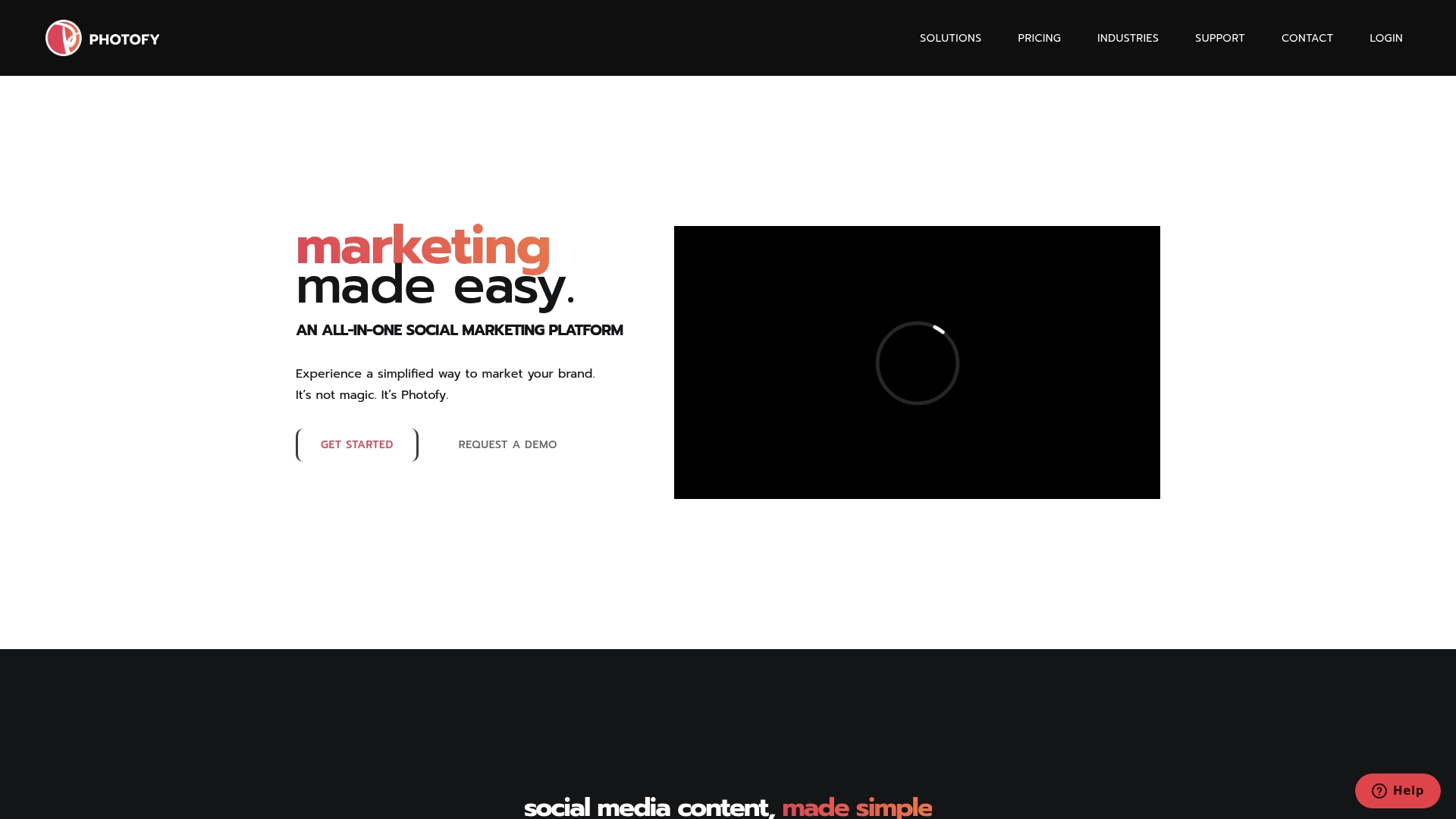
For franchise networks, direct-selling organizations, and brands managing distributed teams, Photofy’s pre-designed templates, stock asset library, and white-label content management tools address the specific challenge of keeping hundreds of locations or representatives on-brand simultaneously. The enterprise platform supports custom template libraries, brand-locked asset controls, and white-label distribution that scheduling-first tools simply are not built to handle. Franchise partners like Keller Williams and F45 Training use Photofy precisely because content consistency at scale requires more than a scheduler.
For small businesses and creators, Photofy’s free tier and personal plans offer a low-friction starting point for producing polished social visuals without design software. Scheduling basics and a content calendar are included, so you are not managing two separate tools.
Photofy does not replace a full social management suite if enterprise listening or per-seat multi-brand inbox management are your primary needs. But if your team’s biggest time sink is creating content that actually looks on-brand, Photofy is worth exploring as your content-creation layer, whether you pair it with another tool or use it as your primary platform. Visit photofy.com/pricing to see which plan fits your team size and workflow.
Sources and further reading
Verify all pricing and feature availability directly with vendors during your trial, as plans change frequently. The sources below were used to support specific claims in this article.
- Top Sprout Social Alternatives & Competitors 2026 | Gartner Peer Insights — Peer-sourced evaluations of Sprout Social alternatives across evaluation, integration, support, and product capability dimensions.
- Compare Hootsuite and Sprout Social | G2 — User review data on UI/UX, reporting, support responsiveness, and integration depth for both platforms.
- 11 Best Sprout Social Alternatives for 2026 | Blogging Wizard — Agency-focused feature analysis including white-label reporting, client dashboards, and multi-brand management pricing.
- Hootsuite Reviews | G2 — User reviews covering Hootsuite’s integration depth, team management, and enterprise features.
- Sendible Reviews | G2 — User reviews on Sendible’s report builder, approval workflows, and agency use cases.
- Content Marketing Automation | BabyLove Growth — Partner resource on scaling content production and collaboration workflows with automation tools.