

FTC Ready Cadence and Templates for Direct Sales Social Media Sellers
Pick one or two social platforms that match where your customers already spend time, set up a branded profile with a simple disclosure template in your bio, and commit to a 3 to 4 posts a week cadence, starting this week. Add a weekly 20-minute engagement session to answer comments and DMs. That’s the entire starting formula: focus, consistency, transparency, and a way to track what’s working.
TL;DR:
- Focus on one primary and one secondary social platform that best match your target audience’s habits, not on trying to be everywhere at once.
- Building a consistent flow of six core content types, like demos and testimonials, around a manageable schedule helps maintain an authentic presence without daily creation.
- Responding promptly to comments and DMs through live demos and private groups significantly boosts conversion rates, especially when paired with limited-time offers.
- All promotional content must include clear, visible FTC disclosures in posts, stories, or live streams to remain compliant and protect both sellers and brands.
- Tracking engagement, conversation, click-through, and lead rates weekly using UTM or link shorteners allows for simple, data-driven improvements over time.
Table of Contents
- Why social media should be central to direct sales today
- Platform choices: which channels to prioritize and why
- Content types and a repeatable content calendar
- Turning followers into buyers without feeling pushy
- Staying compliant: FTC disclosure rules for direct sellers
- Measuring success without drowning in data
- Onboarding and training your sellers the right way
- How Photofy helps put these tactics into practice
- Building a social selling business that lasts
- A simple next step with Photofy
- Where these recommendations come from
- Sources
- FAQ
Why social media should be central to direct sales today
Direct selling and social media solve each other’s biggest problems. The industry runs on personal relationships and word of mouth, and social platforms give you the reach to introduce yourself to hundreds of potential customers while still feeling personal. The WFDSA STATS report found direct selling generated roughly $164 billion in global retail sales in 2024, with wellness, cosmetics, and personal care as the leading categories, product types that happen to photograph and demo beautifully on video.
According to the WFDSA STATS report, direct selling generated roughly $164 billion in global retail sales in 2024, a reminder that this industry is large enough to reward sellers who show up consistently online. Social platforms shorten the path from discovery to first purchase, and they make it far easier to stay visible to past customers who are your best source of repeat orders and referrals.
Platform choices: which channels to prioritize and why
Your product type and your customers’ habits should decide where you post, not what’s trendy. A quick way to check your instincts:
- Instagram and TikTok fit visual products best, think product demos, transformation videos, and short Reels that show the item in use.
- Facebook works well for community building through groups, live events, and customers who prefer longer posts and discussion threads.
- Pinterest suits evergreen, searchable content like recipes, styling ideas, or how-to guides that keep working months after you post them.
- LinkedIn is the strongest option for recruiting new consultants or reaching business partners rather than end consumers.
Once you’ve matched product to platform, the operational rule is simple: focus your energy on one primary and one secondary channel, repurpose the same content across both with small format tweaks, and schedule posts in batches instead of creating daily from scratch. Spreading yourself across four or five platforms usually means mediocre presence everywhere instead of a strong one where it counts. A guide on distributor social strategy notes that platform strengths differ enough that matching your product to the right channel matters more than being everywhere at once.
Content types and a repeatable content calendar
A sustainable posting habit comes from having a small set of repeatable formats, not from constantly inventing new ideas. Build your content around six core types: product demos, quick tutorials, customer stories or user-generated content, behind-the-scenes moments, soft recruitment posts, and time-limited offers. A workable posting ratio is roughly 5 promotional posts to 3 educational posts to 2 personal or behind-the-scenes posts across every two weeks.
A simple four-week starting calendar looks like this:
- Week 1: product demo, customer testimonial, behind-the-scenes, tutorial.
- Week 2: limited offer, educational tip, personal story, product demo.
- Week 3: recruitment post, customer story, tutorial, behind-the-scenes.
- Week 4: offer reminder, tutorial, demo, personal reflection on the month.
You can pull a ready-made version of this from free content calendar templates instead of building one from scratch.
Batch your shooting sessions, film five or six pieces of raw footage in one sitting, then edit and caption them across the week using saved caption templates. Ready-made platform CTA templates speed this up further since you’re adapting proven phrasing rather than writing new calls to action every time.
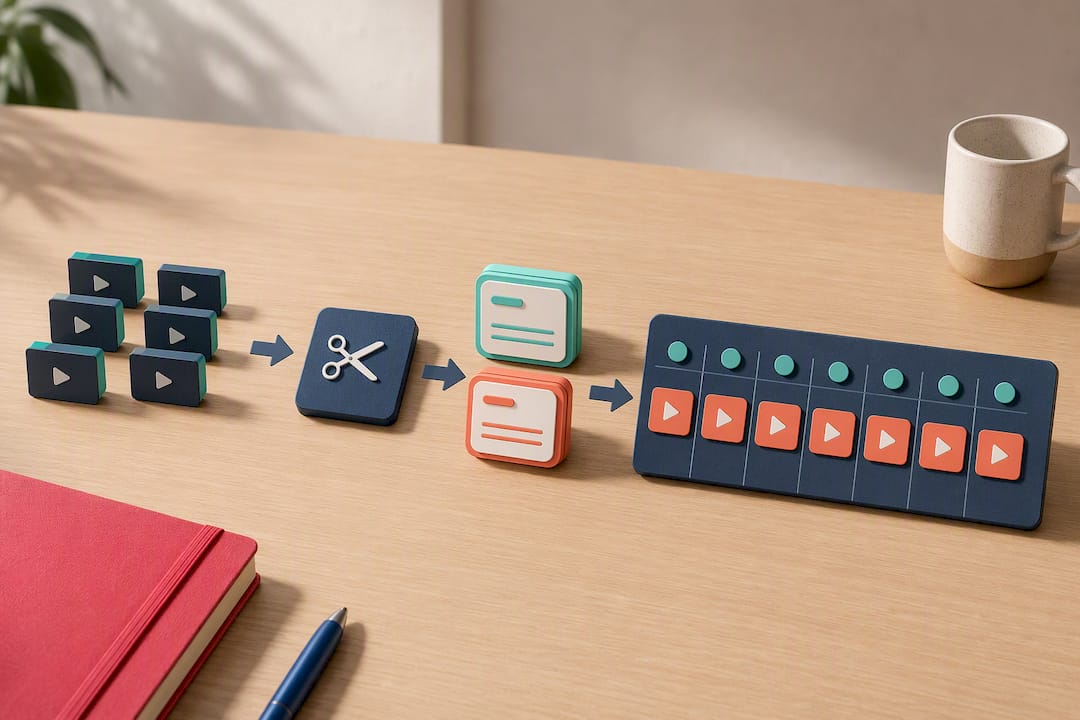
Pro Tip: Shoot your week’s video content in one sitting, right after your best-lit hour of the day, and you’ll never scramble for a post idea again.
Turning followers into buyers without feeling pushy
Engagement only matters when it leads somewhere. The most reliable path is a comments-to-DM funnel: someone comments on a post, you reply publicly, then move the detailed conversation to a direct message where you can ask questions and recommend a specific product.
- Run live demos with a small, time-limited offer attached, live audiences convert better when there’s a reason to act that day.
- Use private groups to nurture warmer leads with more personal content than your public feed carries.
- Follow an RSVP to live to DM to conversion flow for events: invite people, host the live session, follow up individually, then close.
- Keep micro-conversation scripts ready, a few lines that ask about needs before pitching a product, so replies feel like a conversation rather than a sales script.
Responding quickly and using interactive formats like live video tends to raise both satisfaction and conversion, according to research on driving direct sales through social platforms, which is part of why live demos and fast DM replies outperform static posts sitting untouched for days.
Staying compliant: FTC disclosure rules for direct sellers
Every post that promotes your business as a paid seller or that involves any material connection to a brand needs a clear, conspicuous disclosure. The FTC’s influencer guide recommends simple, visible language like “Ad,” “#ad,” or “Paid partnership” placed directly with the endorsement rather than buried in a bio or a string of hashtags.
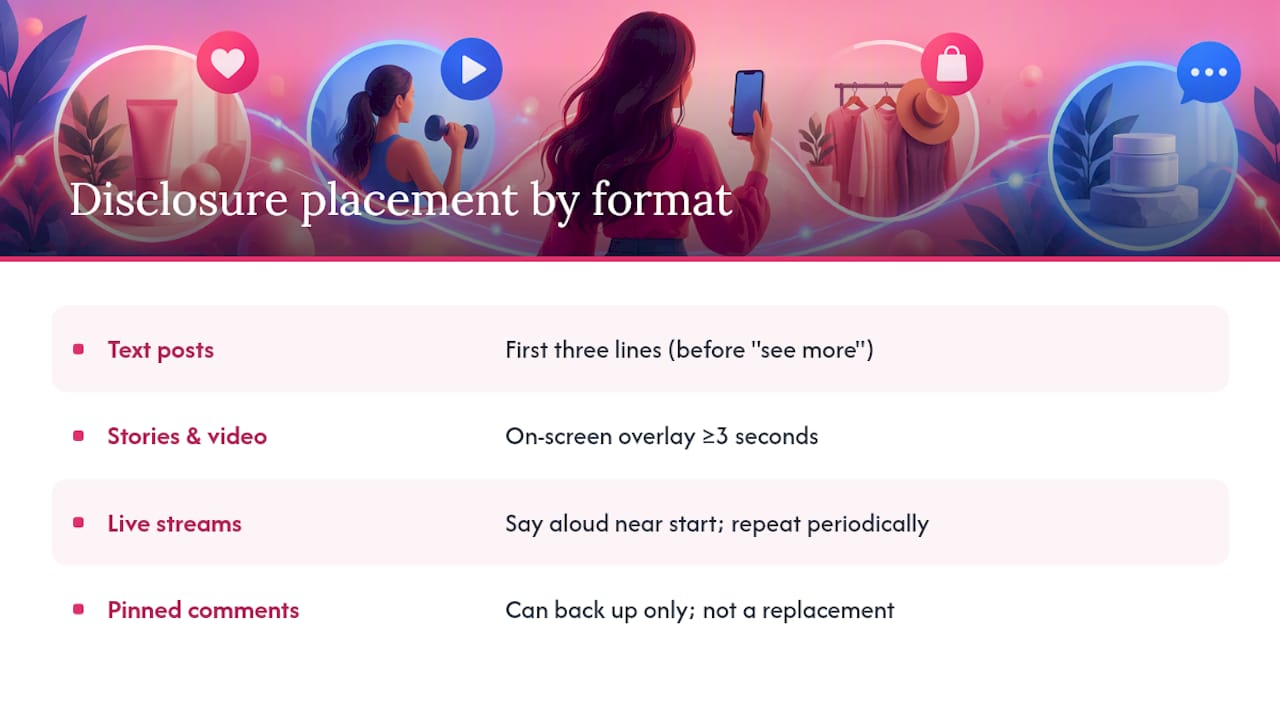
Placement depends on the format. In text posts, put the disclosure in the first three lines, before the “see more” cutoff. In Stories and video, overlay it on screen for at least three seconds. In live streams, say it out loud near the start and repeat it periodically. Pinned comments can back up a disclosure but should never replace one in the post itself.
Disclosure responsibility sits with both the seller and the brand, according to the FTC’s endorsement guidance, which means ambiguous or hidden disclosures put both parties at risk. Brands that train their sellers with real examples, not just a policy document, see far more consistent compliance across their networks.
Measuring success without drowning in data
You don’t need a marketing degree to track what’s working, just a handful of numbers checked weekly. Watch your engagement rate (likes, comments, shares relative to followers), your conversation rate (how many comments turn into DMs), your click-through rate on links, and your recruit lead rate if growing a team matters to you.
- Tag every link you share with a UTM parameter or a link shortener so you can see which post actually drove the click.
- Build a weekly snapshot of these four numbers and a monthly trend line to catch patterns early.
- Run small experiments, one caption style, one CTA placement, one posting time, and compare results before changing your whole approach.
A reporting guide with templates can save you from building a dashboard from zero.
Onboarding and training your sellers the right way
A consultant’s first week sets the tone for how they’ll post for months. Give them a checklist, not a lecture.
- Set up a branded profile with consistent colors, logo placement, and a bio that includes a disclosure statement.
- Share the basic branding rules: approved colors, logos, and tone of voice.
- Walk through disclosure examples for text posts, Stories, and live video so there’s no ambiguity.
- Assign the first week of content using pre-made templates so day one doesn’t feel like a blank page.
Beyond week one, give sellers a small library of editable templates rather than a single rigid script, and route anything higher risk, paid promotions or bold health claims, through a quick approval step. Simple incentives (a shoutout for the most engaging post that month) and short, focused training on one skill at a time build momentum faster than a single long onboarding session ever could. A 90-day compliance checklist gives leaders a ready structure to build this around.
Pro Tip: Give new sellers one editable template a week for their first month instead of a full library on day one, so they build the habit before the choices overwhelm them.
How Photofy helps put these tactics into practice
Photofy maps directly onto the tactics above. Its template library turns the batching workflow into minutes instead of hours: build a set of branded post templates once, then let every seller personalize and publish the same week. Scheduling tools support the 3 to 4 posts a week cadence without daily manual work, and built-in brand controls keep disclosures and visual identity consistent across an entire distributor network, addressing the exact governance gap that makes compliance hard to enforce at scale. A Photofy case study on dealer social templates shows how a repeatable template and batching system helps a distributed network publish consistently without a central team creating every post by hand.
Building a social selling business that lasts
The sellers who win long term aren’t the ones chasing every trend or posting the flashiest offer. They’re the ones who show up the same three times a week, disclose consistently, and treat their follower list like a relationship instead of a funnel. Clear, early disclosure tends to build more trust over time than it costs in short-term conversions. Track your numbers monthly, adjust one variable at a time, and let consistency do the heavier lifting than any single viral post ever could.
— Jon
A simple next step with Photofy
If the checklist above feels like a lot to build from scratch, Photofy handles the repetitive parts so you can focus on the relationships. The platform gives you pre-designed templates for the six content types covered earlier, scheduling so your cadence runs itself, and brand controls that keep disclosures and visuals consistent across an entire seller network.
- Templates and asset libraries speed up the batching and calendar work from the content section.
- Scheduling tools keep your posting cadence steady without daily manual effort.
- Brand governance features help leaders enforce consistent disclosures across every rep.
Photofy is one practical way to run this playbook without building every piece by hand. Visit Photofy’s pricing page to compare individual and enterprise options, or explore team and enterprise solutions if you’re rolling this out across a distributor network.
Where these recommendations come from
The disclosure guidance in this article draws on the FTC’s influencer guide and its endorsement guidance Q&A. Industry figures come from the WFDSA STATS report, and the direct marketing framing draws on Investopedia’s overview of direct marketing. For more on building credibility with an online audience, see this guide to building trust online.
Sources
- FTC influencer guide (influencer/endorsement guidance)
- FTC endorsement guides — what people are asking
- WFDSA STATS report 2024–2025
- Direct marketing explained — Investopedia
FAQ
What is the 5 5 5 rule on social media?
Definitions vary across marketers, but a common version suggests spending 5 minutes engaging with others’ content, writing 5 comments, and sharing content on 5 different posts each day to build visibility before posting your own content.
Who is the top-ranked direct selling company?
Rankings shift year to year and aren’t something this article can confirm with a sourced figure. The WFDSA STATS report covers industry-wide trends rather than a definitive company ranking.
What is the 3-3-3 rule in sales?
This is another informal guideline that varies by source, generally referring to reaching out to 3 new prospects, following up with 3 existing contacts, and posting content 3 times within a set period, usually a day or a week.
Can you sell directly on Instagram?
Yes, Instagram supports product tagging, Shops, and direct links in Stories and bios that let customers purchase without leaving the app. Many direct sellers pair this with comment-to-DM conversations to answer questions before a sale closes.
How often should independent sellers post on social media?
A cadence of 3 to 4 posts a week per platform, paired with a weekly engagement session for replying to comments and messages, is a sustainable starting point for most independent sellers without causing burnout.