

UGC vs Branded Content for Marketers: 6.73x, Then a Hybrid Plan
Use UGC when you need high-trust, performance-driven creative, and use branded content when you need control, positioning and long-form storytelling. Our recommendation is a hybrid: let UGC carry your conversion and ad work while branded content anchors launches and brand identity. Emplifi benchmarks and the FTC’s endorsement guidance support both halves of that split.
TL;DR:
- Emplifi reported UGC driven conversions of 6.73x in Q1 2026, up from 4.27x in Q4 2025, but the figures reflect its customers and are not universal benchmarks.
- Before repurposing customer posts, secure written permission that names channels, duration, and paid or unpaid use; disclose free products, incentives, and other material connections clearly.
- Use UGC reviews on product pages and refresh paid ads when fatigue appears; reserve branded explainers for launches that need one consistent message.
- Test UGC against branded creative with the same audience, budget, and placement, include a control group, and wait for a meaningful sample before choosing a winner.
- Refresh paid creative before performance falls and keep a steady UGC pipeline; plan branded assets around launches and seasonal moments.
Table of Contents
- What is the difference between UGC and branded content?
- What does the performance evidence say?
- Which format fits each stage of your funnel?
- How do you source and disclose UGC legally?
- How do you run UGC and branded content as one engine?
- How do you measure UGC vs branded content?
- How do you collect ad-ready UGC quickly?
- Where should you invest first?
- Turn the hybrid plan into a daily workflow
- FAQ
- Sources
What is the difference between UGC and branded content?
Labels get blurred in marketing meetings, so we sort formats by who creates them, who controls them and what rights you hold.
- Organic UGC: content customers create on their own, unpaid. Shopify defines UGC as content made by customers rather than the brand, which makes it authentic but hard to schedule or direct.
- Paid UGC: content commissioned from creators who produce assets for your brand to use, not for their own feeds. You pay per asset, and you get far more control over angles, scripts and licensing than organic content allows.
- Influencer content: posts a creator publishes to their own audience, usually under a sponsorship. Reach is the draw, but the creator keeps editorial say and the price is higher.
- Brand-generated content: everything your team or agency produces: product films, campaign photography, templated social posts. You own it and control it fully, and it can feel more polished than persuasive.
Cost expectations follow the same pattern. Organic UGC costs nothing to receive, though scaling it often means budgeting for product seeding, licensing or creator fees. Paid UGC is typically priced per asset, and influencer partnerships generally cost more than either. The trade-off is simple: the more control you want, the more you pay, and the more authenticity you risk giving up.
What does the performance evidence say?
The strongest recent signal comes from Emplifi’s Q1 2026 benchmarks report, which found pages featuring UGC drew more site visits and reported UGC-driven conversions rising from 4.27x in Q4 2025 to 6.73x in Q1 2026 for its customers.
UGC-driven conversions reached 6.73x in Q1 2026, up from 4.27x in Q4 2025, among Emplifi customers. That is a vendor-reported figure from its own customer base, so treat it as direction, not a promise.
Other evidence points the same way:
- Adobe describes UGC as scalable social proof that builds trust and speeds conversion when it lives on owned channels and in your CMS.
- WordStream notes that UGC performs well in short-form video and product page contexts and converts easily into shoppable content and email creative.
- Nielsen’s Trust in Advertising research shows recommendations from people consumers know are the most trusted channel, which explains why peer-style creative lands.
- IAB’s reporting shows creator ad spend growing than total media, a sign brands are betting on creator-led formats.
The limits matter. These sources vary in sample, platform and method, and IAB’s own report flags measurement and operational tooling as the main hurdles for brands scaling creator programs. Test on your own channels before you reallocate budget.
Which format fits each stage of your funnel?
Match the format to the job, not to a favorite.
- Awareness: branded content sets the story and visual identity, while UGC-style short-form video on TikTok and Instagram earns attention because it looks like a peer post. Branded assets take longer to produce but last longer.
- Consideration: UGC reviews, unboxings and testimonials on product pages answer “will this work for me?” faster than polished copy. Branded explainers and comparison pages add the structure UGC lacks.
- Conversion: UGC in paid social and email is usually the first thing we would test, since it reads as a recommendation rather than an ad.
- Retention: branded content (guides, onboarding sequences, launch announcements) keeps customers informed, while featuring customer content rewards loyalty and feeds your next round of social proof.
Operationally, branded content has the longest lead time and the highest upfront cost, but you can reuse it for months. UGC is quicker to gather and cheaper per asset, though its shelf life in ads is shorter, so you need a steady supply.
Decision rules we use:
- If you need social proof on a product page, prioritize UGC.
- If you are launching something new and need one consistent message, prioritize branded content.
- If you are fighting ad fatigue, rotate in fresh UGC.
- If you need a story that holds your positioning across channels, lean on branded content, and our visual storytelling guide shows how.
How do you source and disclose UGC legally?
Permission comes first. Before repurposing a customer’s post in an ad or on a product page, confirm you have permission to use it. Written licensing language should name the channels, the duration and whether the use is paid or unpaid.
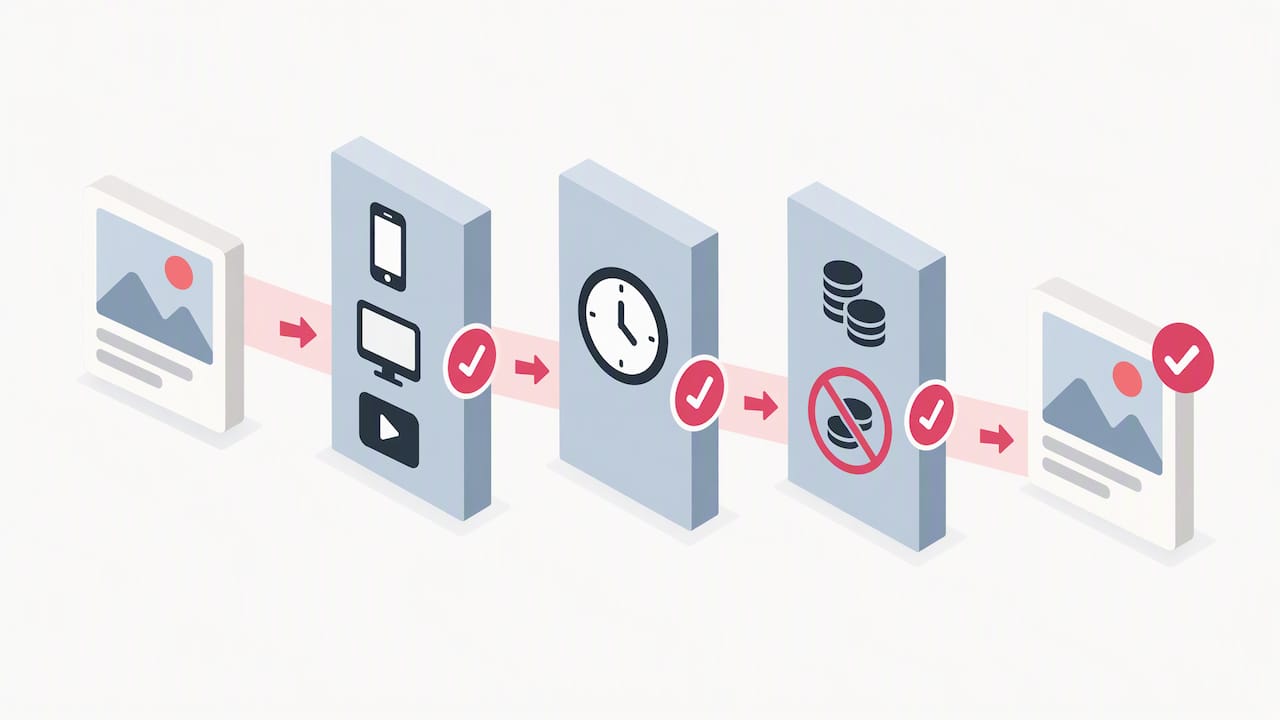
Disclosure is the second requirement. The FTC’s endorsement guides treat any material connection, such as free product, payment, incentives or affiliate ties, as something that must be disclosed. The proposed guides published in the Federal Register define an endorsement and state that disclosures must be clear and conspicuous and not contradicted by other communications. Crediting a creator by name is not the same as disclosing the relationship.
A workflow that keeps you safe:
- Identify the post or creator you want to feature and confirm who owns the content.
- Send a short request that states exactly where and how long you plan to use it.
- Get a written yes (a DM or email reply counts if you save it).
- Log the asset, creator, permission date and expiry in your rights tracker.
- Add a disclosure in the same format as the content whenever a material connection exists.
Pro Tip: Store the permission message alongside the asset file itself, so anyone who pulls it into an ad can see the usage terms in seconds.
For the wider framework behind these controls, see our content governance guide.
How do you run UGC and branded content as one engine?
We think of the program as five steps: source, curate, license, amplify and measure.
- Source: collect UGC through hashtags, post-purchase asks and seeding, and commission paid UGC where you need specific angles.
- Curate: pick assets that match your messaging and quality bar, discarding anything off-brand or unclear.
- License: secure permissions before anything leaves the shared folder.
- Amplify: route winners into paid social, product pages and email, and wrap the best of them in branded templates for consistency.
- Measure: feed results back into your next brief.
Governance keeps the engine from drifting. We recommend four controls: a brand approval gate before publishing, a legal check on rights and disclosure, consistent asset metadata (creator, source, permission, expiry), and a usage-rights tracker with renewal dates. A metadata-first asset library makes this far easier to maintain than scattered folders.
Cadence matters too. Refresh paid creative before performance sags, rather than waiting for CPA to climb, and keep a standing pipeline of new UGC so the rotation never runs dry. Plan branded content around launches and seasonal moments, and let UGC fill the weeks in between.
Pro Tip: Wrap approved UGC in your brand’s frame, logo and caption style so scrappy content still looks like it belongs to you.
How do you measure UGC vs branded content?
Pick KPIs by funnel stage. Top of funnel, watch engagement and reach. In the middle, track click-through rate and time on page. At the bottom, focus on conversion rate and cost per acquisition (CPA). Returning visitors are a useful secondary signal for retention content.
A simple testing plan:
- Choose one goal and one metric, such as CPA on a single campaign.
- Run a UGC creative against a branded creative with the same audience, budget and placement.
- Hold out a control group that sees neither new variant, so you can measure incremental lift.
- Let the test run long enough to gather a meaningful sample before calling a winner.
- Scale the winner, then retest against a fresh challenger.
Keep expectations grounded. Emplifi’s reported 6.73x conversion figure describes its own customers, not a universal benchmark, so your numbers may differ. For reporting layouts, our social media reporting templates can save setup time, and this guide on leveraging UGC for SEO covers the owned-channel side.
How do you collect ad-ready UGC quickly?
Start with prompts people will actually answer.
- Channel prompts: a branded hashtag, a post-purchase email asking for a photo or short video, and product seeding to people likely to share.
- Incentives: discounts, feature spots or loyalty points, each disclosed where required.
- Brief template: request a few shots (unboxing, in use, result), a vertical format, natural lighting, a caption suggestion, and a file name like creator_product_date.
- Rights check: confirm written permission, scope and expiry.
- Minimal QA: check audio clarity, no third-party logos or music, and a clean opening.
Pro Tip: Send creators a one-page brief with a sample clip so they know the target before they hit record.
If your team builds on design tools, our roundup of social design apps covers options for finishing assets.
Where should you invest first?
Here is where we land after weighing the evidence.
- Test UGC in paid social first, because the conversion upside is where the data is strongest.
- Set governance before you scale, since rights problems are cheaper to prevent than to unwind.
- Treat paid UGC as an asset factory, with briefs, volume and refresh cycles.
- Keep branded content for launches and positioning, where control is the point.
- Run small experiments every month rather than one big annual bet.
My opinion: spend your first dollar on a governed UGC test, because it teaches you more about what your audience believes than another polished campaign will.
— Jon
Turn the hybrid plan into a daily workflow
We help distributed teams make branded content and wrap UGC in on-brand templates without a design bottleneck. You get pre-designed templates, an asset library, scheduling and analytics, with white-label options for franchises and enterprise teams that need brand control. Small Business plans cost $10.99 per month or $99 per year, and Individual and Enterprise plans are listed on our pricing page. Start with our Small Business plans and put your first governed UGC test into production this week.
FAQ
What is considered branded content?
Branded content is anything a brand creates or commissions to tell its story, from campaign photography and product films to templated social posts. The brand controls the message and the rights, which makes it strong for launches and positioning.
Is branded content more trustworthy than user-generated content?
Generally no. Nielsen’s research finds that recommendations from people consumers know are the most trusted channel, and UGC reads like a peer recommendation. Branded content earns trust through consistency and clarity instead.
What is the difference between brand content and influencer content?
Brand content is made and published by the brand itself. Influencer content is published by a creator to their own audience, usually under a sponsorship, so it carries the creator’s voice and requires a clear disclosure of the relationship.
Do I have to disclose free products given to creators?
Yes, in most cases. The FTC treats free product as a material connection, and its endorsement guides call for disclosures that are clear and conspicuous. Check the FTC’s own business guidance for your specific case.
Sources
- [Federal Register
::
Guides Concerning the Use of Endorsements and Testimonials in Advertising](https://www.federalregister.gov/documents/2023/07/26/2023-14795/guides-concerning-the-use-of-endorsements-and-testimonials-in-advertising) - User Generated Content (UGC): Benefits and Examples (2026) – Shopify
- User-Generated Content Drives 6.7x Higher Conversions for Brands, New Data Shows
- 2025 Creator Economy Ad Spend & Strategy Report (IAB U.S.)
- User-generated content: Benefits, strategy, and examples